
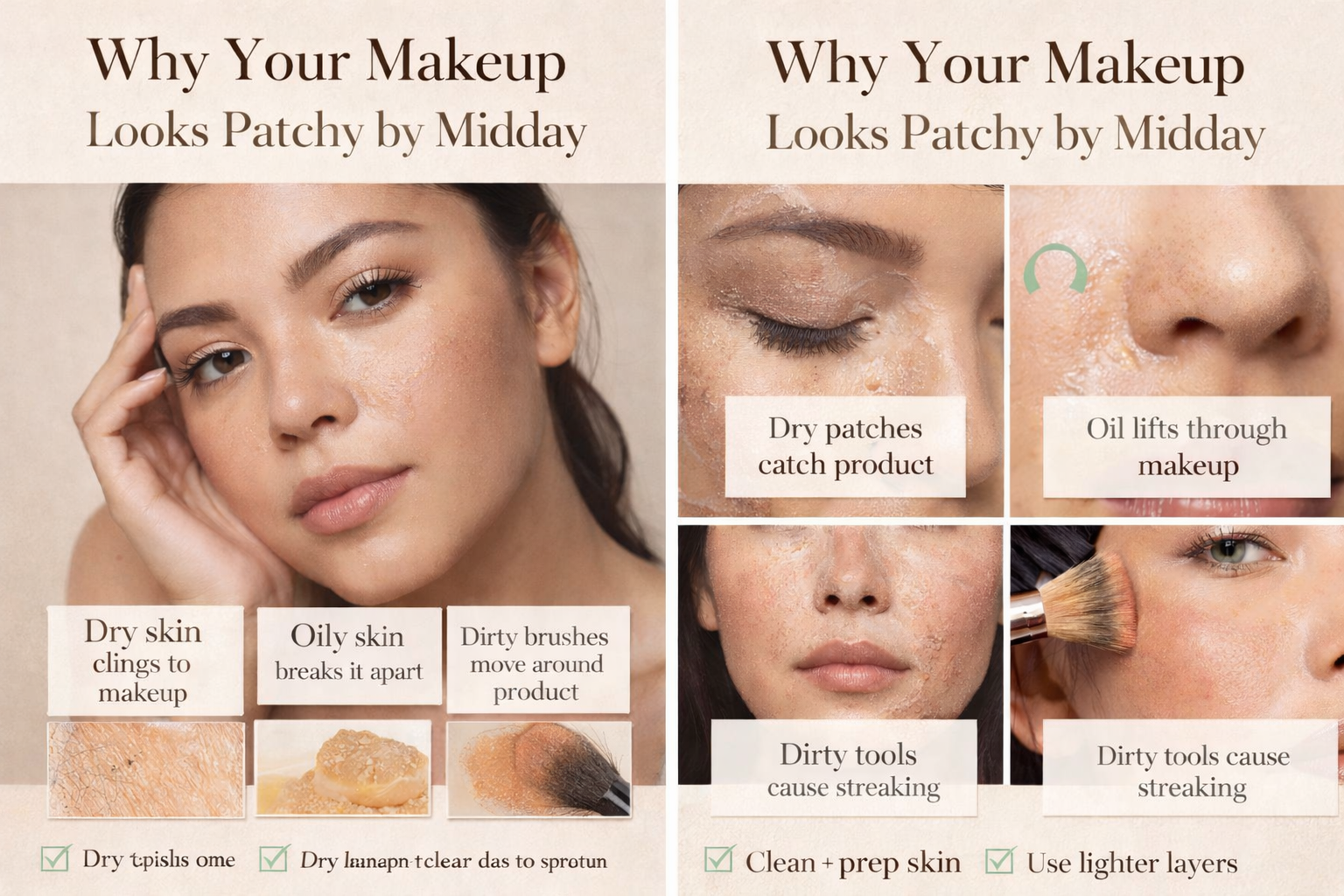
If your makeup looks smooth in the morning but starts breaking apart a few hours later, the issue usually isn’t the makeup itself. Most of the time, it comes down to prep, buildup, and maintenance.
Patchy makeup often happens when:
- skin is dry in some places and oily in others
- skincare hasn’t fully absorbed
- too many layers are sitting on the skin
- brushes or sponges are carrying old product
- oil starts breaking through during the day
The good news is that this is usually easy to fix. Once your skin is cleaner, your layers are lighter, and your tools are maintained properly, makeup tends to sit better and stay smoother for longer.
The Main Reasons Makeup Turns Patchy
Patchiness usually starts at the base. Makeup wears best on skin that is smooth, balanced, and free from excess residue. If your skin has dry patches, leftover product, or too much oil building up underneath, foundation won’t hold evenly.
That’s when you start seeing:
- product clinging around the nose or chin
- foundation fading in certain spots
- makeup separating around the T-zone
- texture showing more as the day goes on
A lot of people try to fix this by adding more coverage, but that often makes the finish heavier and more obvious. In most cases, the real fix is not more makeup — it’s a better surface underneath it.
Dry Skin Makes Makeup Catch and Crack
One of the biggest causes of patchy makeup is hidden dryness. Your skin might feel fine at first, but small rough areas can grab onto foundation and make it look uneven by midday.
This usually shows up around:
- the nose
- the chin
- between the brows
- dry spots on the cheeks
When foundation settles, those dry areas become more noticeable. Instead of looking smooth, the product starts catching, cracking, or clinging.
The best fix is simple:
- keep skin gently exfoliated
- use enough hydration
- let moisturizer fully absorb before makeup
The goal is not to overload the skin. It’s to make the surface smooth enough that makeup glides on evenly.
Oily Buildup Can Break Your Base Apart
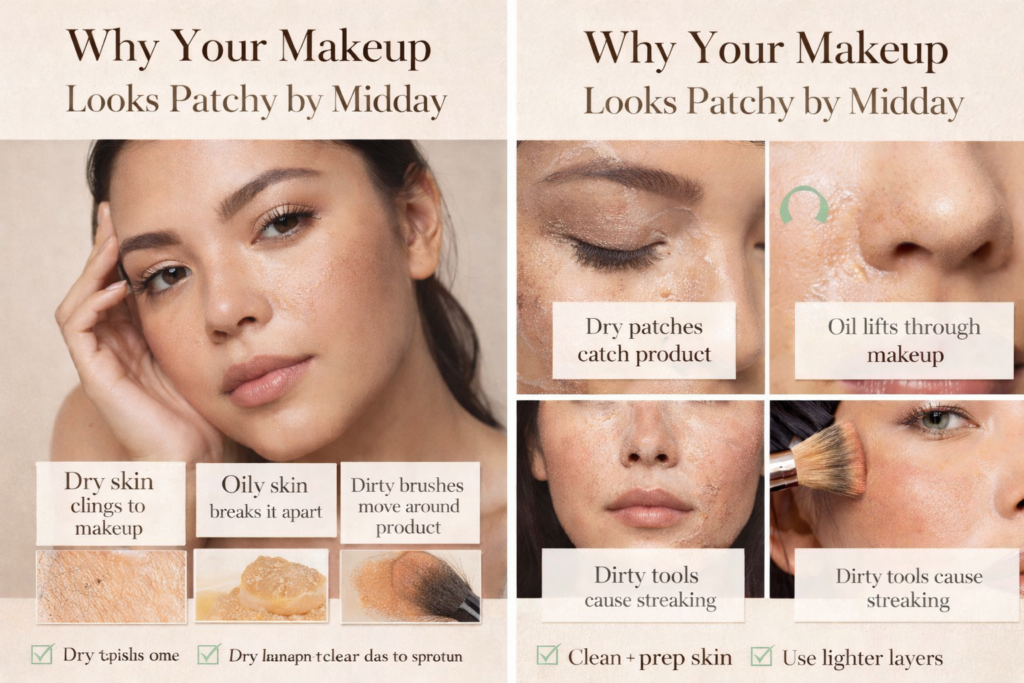
Patchy makeup is not only a dry-skin issue. Oil can cause the same problem in a different way.
As the day goes on, natural oil can rise through your foundation and start breaking it apart. This is why makeup often disappears or separates first around the:
- forehead
- nose
- inner cheeks
Instead of staying blended, it starts looking uneven, blotchy, or shiny in some places and worn away in others.
A common mistake is applying too much powder in the morning to “prevent” this. That can make skin look flat at first and textured later.
A better approach:
- use thinner base layers
- set only the areas that get oily
- blot before reapplying product
- avoid piling powder on top of fresh oil
Oil control works best when it’s managed lightly, not aggressively.
Dirty Tools Make Makeup Sit Worse
Dirty brushes and sponges are a huge reason makeup starts looking off faster than it should.
A solid brush and sponge cleanser is the best way to remove buildup and keep tools blending smoothly.
When tools aren’t cleaned regularly, they collect:
- leftover foundation
- skin oil
- old skincare residue
- dead skin
- bacteria
That buildup changes how makeup goes on. Instead of blending smoothly, the tool can drag, streak, or disturb the layers underneath.
This means even good products can start looking patchy if you’re applying them with tools that are already overloaded.
A simple maintenance habit makes a big difference:
- wash foundation and concealer brushes regularly
- clean sponges often and let them dry fully
- don’t keep reusing tools packed with old product
Clean tools don’t just help hygiene — they help your makeup sit more evenly from the start.
Too Much Product Layering Creates Texture
Another big reason makeup looks patchy by midday is over-layering.
This usually happens when:
- skincare is still sitting on the surface
- sunscreen hasn’t set yet
- primer is too heavy
- foundation, concealer, and powder are all layered too thickly
At first, it can look fine. But as the day goes on, those layers start shifting, bunching, or separating. That’s when makeup begins to pill or look textured.
The fix is usually to simplify:
- apply thinner layers
- give each step time to settle
- avoid adding extra product just to “perfect” one small area
A cleaner routine almost always wears better than a heavy one.
Poor Skin Prep Is Usually the Real Problem
If there’s one thing behind most patchy makeup, it’s poor prep.
Makeup wears best when skin is:
- freshly cleansed
- lightly hydrated
- smooth, not flaky
- not coated with too many products
If your skin still feels sticky, greasy, or uneven before foundation, your makeup will show that later.
A good prep routine doesn’t need to be complicated:
- Cleanse away oil, sweat, and old residue
- Use light hydration where needed
- Let skincare absorb
- Apply makeup in thin, even layers
That’s what helps makeup stay smoother for longer.
How to Keep Makeup Looking Smooth Past Midday
Once makeup starts looking patchy, the wrong touch-up can make it worse. Rubbing, layering more powder, or adding thick foundation on top usually creates more texture.
A better midday reset looks like this:
- blot excess oil first
- add a little hydration if skin looks dry
- gently press the area with a clean sponge
- touch up only where coverage has actually faded
This keeps the finish looking fresher without building up too much product.
Think of it as maintenance, not redoing your whole face.
Conclusion
If your makeup looks patchy by midday, the cause is usually a mix of dryness, oil buildup, dirty tools, heavy layering, and rushed skin prep. The solution is rarely more makeup. It’s usually a cleaner, lighter routine.
When your skin is properly prepped, your tools are clean, and your layers are kept simple, makeup has a much better chance of staying smooth and even throughout the day. In most cases, better makeup wear comes from better maintenance.
FAQs
Why does my makeup look good at first but patchy later?
Because the issues underneath take time to show. Dry spots become more visible as product settles, and oil can slowly break apart your base during the day.
Can dirty brushes really cause patchy makeup?
Yes. Dirty tools can hold old product and oil, which makes blending less even and can disturb fresh layers.
Is patchy makeup caused by dry skin or oily skin?
It can be either. Dry skin makes makeup cling and crack, while oily skin makes it separate and fade.
What’s the biggest mistake that causes patchy makeup?
Usually it’s over-layering on top of poor prep. Too much product on skin that isn’t properly prepped leads to faster breakdown.
How do I fix patchy makeup during the day?
Blot first, then lightly press the area with a clean sponge. Add only a small amount of product if you truly need it.
Leave a Reply