
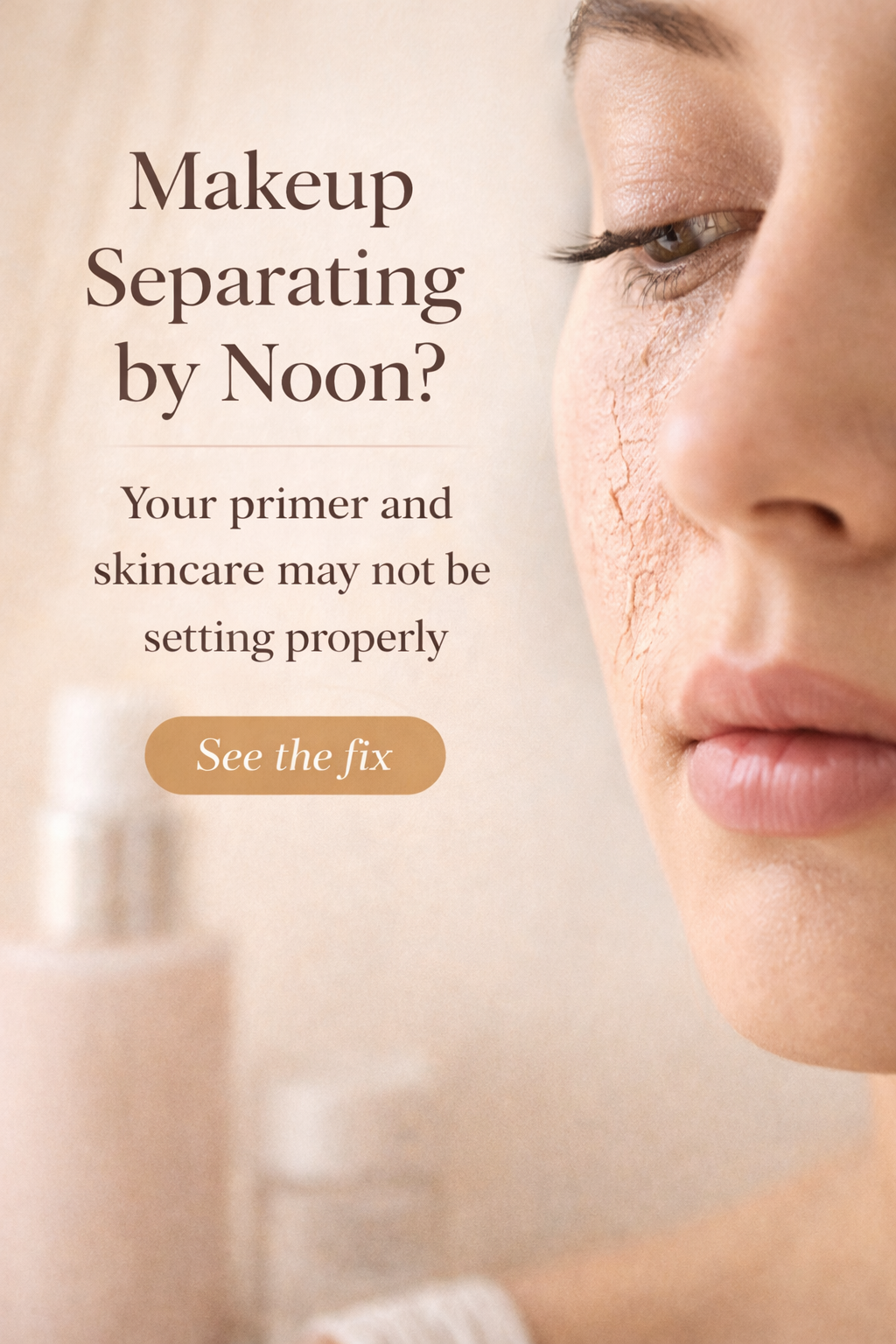
If your makeup looks smooth in the morning but starts breaking apart by lunchtime, the problem usually isn’t your foundation alone. In most cases, makeup separating by noon happens because the layers underneath it—your skincare, sunscreen, primer, and even leftover oil—aren’t settling in the right order.
This is why the issue fits a clean and maintenance routine more than a makeup routine. A stable base comes from clean prep, proper timing, lighter layers, and better upkeep throughout the day. When your skin is over-prepped, under-set, or still damp when foundation goes on, makeup can start sliding, pilling, or splitting in patches around the nose, chin, and cheeks.
The good news is that this is usually fixable without buying a whole new makeup bag. Most of the time, you need to change how you prep and layer, not just what you use. Once your base is cleaner and more balanced, your foundation tends to sit better, wear longer, and look fresher by midday.
A gripping primer like e.l.f. Power Grip Primer can help support a smoother base when used the right way. Buy now
Below is a simple, realistic guide to what causes separation, how to stop it, and what small maintenance habits make the biggest difference.
What “Makeup Separating” Actually Means
When makeup separates, it usually shows up in one of these ways:
- foundation looks patchy or streaky by noon
- product gathers around the nose or mouth
- the base looks cracked in some areas and shiny in others
- makeup seems to “slide off” instead of fading evenly
- touching up makes it look worse, not better
This happens when the layers underneath your makeup aren’t forming a smooth surface. Instead of gripping evenly, foundation ends up sitting on top of moisture, excess oil, half-set skincare, or incompatible textures.
That’s why this problem often feels random. Your foundation may work perfectly one day and separate badly the next—because your skin prep, timing, or oil levels changed.
If you treat this like a maintenance issue, it becomes easier to solve. Think of your base like a clean surface before painting: if the surface is oily, damp, or uneven, the finish won’t last.
The Real Reasons Your Makeup Separates by Midday
The biggest mistake people make is blaming only the foundation. In reality, separation usually starts much earlier in the routine.
1) Your skincare is still too wet
If you apply foundation before moisturizer or sunscreen has settled, you’re layering makeup onto a surface that’s still moving. That can make the base slip, thin out in spots, or bunch up when you blend.
This is especially common when you rush through skincare and makeup back-to-back. Even good products can perform badly if they don’t get time to set.
2) You’re using too much product underneath
A thick routine can feel luxurious, but if you stack heavy moisturizer, sunscreen, primer, and then full-coverage foundation, the base can become too slick. That extra slip can turn into separating later—especially in warm weather or on combination skin.
In many cases, the fix is not more makeup control. It’s less product overall.
3) Your primer and foundation don’t sit well together
Sometimes the issue is texture mismatch. A very slippery base under a heavy foundation can cause uneven wear, especially if you’re rubbing products in instead of pressing them on.
Even when two products technically work together, they can still perform poorly if one hasn’t fully settled first.
4) Your skin isn’t evenly prepped
Dry patches and oilier areas don’t behave the same way. If your skin has flakes around the nose but gets shiny across the T-zone, makeup will wear differently in each area. That’s why some parts look cakey while others break apart.
This is where clean, consistent maintenance matters: gentle cleansing, light exfoliation when needed, and balanced moisture make a huge difference.
5) Your tools may be making it worse
Dirty brushes and sponges can hold leftover product, skin oil, and old residue. Instead of applying your base smoothly, they can drag, create buildup, or disturb layers underneath. That makes midday separation more likely.
A cleaner application tool often fixes more than people expect.
The Clean Base Routine That Helps Makeup Stay Fresh Longer
If you want makeup to stop separating by noon, your goal should be a base that feels clean, settled, and balanced—not sticky, overloaded, or rushed.
Step 1: Start with truly clean skin
Wash off overnight oil, leftover skincare, or any residue from the night before. You don’t need a harsh cleanse in the morning, but your skin should feel fresh, not coated.
If your skin still feels greasy before makeup, that extra slip can break down your base faster.
Step 2: Keep skincare light
Use only what your skin needs that morning. If you’re doing makeup, this usually means:
- a light moisturizer or hydrating step
- sunscreen if you wear it during the day
- no extra heavy oils right before foundation
If your skin is dry, choose hydration that absorbs well instead of layering multiple rich products at once.
Step 3: Let each layer set
This is one of the most overlooked fixes. After moisturizer and sunscreen, give your skin a minute or two. Then apply primer and let that settle too.
Even a short wait helps the surface feel more stable before foundation.
Step 4: Apply thinner layers
A thick base is more likely to move. Use less product than you think you need, then build only where necessary.
Thinner layers tend to wear more evenly and are much easier to touch up later.
Step 5: Press, don’t over-rub
Whether you use fingers, a sponge, or a brush, pressing products into the skin usually keeps the layers more intact than aggressive rubbing. Overworking the base can lift the primer or disturb skincare underneath.
Primer step
If you want to add one product naturally, this is the best place to do it.
Primer I use: e.l.f. Power Grip Primer — Click Here To Purchase Now
Used lightly and given a moment to settle, it fits well into a routine like this because the bigger goal is helping the base stay in place instead of sliding around.
Small Maintenance Habits That Prevent Midday Separation
This is where your site’s clean-and-maintenance angle really matters. Long-wearing makeup is usually the result of little habits done consistently.
1) Clean your tools regularly
A sponge or brush that still holds yesterday’s product can make today’s foundation sit unevenly. Try to rinse sponges often and deep-clean brushes regularly so your base goes on clean.
2) Don’t keep layering touch-ups
If makeup starts separating, piling more foundation on top usually makes it look heavier. Instead:
- blot oil first
- gently smooth the area with a sponge
- reapply only a tiny amount where needed
A cleaner correction works better than a full second layer.
3) Control shine without stripping the skin
Too much powder can make makeup crack, but too much oil can break it down. The goal is balance. Blotting papers or a small amount of powder in the center of the face often work better than trying to mattify everything.
4) Watch the areas that separate first
For many people, it’s the nose, chin, smile lines, or between the brows. These are the places where product tends to move fastest. Apply thinner layers there from the start and avoid overloading them during touch-ups.
5) Keep your skin texture maintained
If you have rough patches, flaking, or uneven buildup, makeup will usually catch there first. You don’t need aggressive exfoliation—just regular, gentle maintenance so the surface stays smoother over time.
This is why “better makeup” doesn’t always solve the issue. Often, the real difference comes from better upkeep.
What to Do When Your Makeup Is Already Separating
Sometimes the damage is already done by noon. In that case, don’t start over unless you absolutely need to.
Try this instead:
- Blot first to remove excess oil
- Press a clean sponge lightly over the area to smooth it
- If needed, add the tiniest amount of product only where it has broken apart
- Set lightly—don’t overload with powder
This works better because it respects the layers already there instead of turning a texture issue into a buildup issue.
If you keep seeing the same separation every day, that’s a sign the real fix belongs in the morning routine, not the touch-up step.
A Better Way to Think About Long-Lasting Makeup
The most helpful mindset shift is this: makeup wear is often a maintenance problem, not a makeup problem.
A smoother, longer-lasting base usually comes from:
- cleaner skin before application
- lighter skincare under makeup
- allowing products to set
- using less foundation
- keeping tools clean
- fixing shine gently instead of piling on product
When you focus on those basics, makeup tends to fade more naturally instead of splitting apart halfway through the day.
And that’s ultimately what most people want—not a thick base that survives at all costs, but one that still looks fresh, smooth, and normal by lunchtime.
Conclusion
If your makeup keeps separating by noon, the issue is often happening underneath the foundation. Skincare that hasn’t settled, too many layers, uneven skin prep, or dirty tools can all make your base break apart faster than it should. The fix is usually simpler than it seems: start with clean skin, keep your prep lighter, let each layer set, and apply less product more carefully. A product like e.l.f. Power Grip Primer can support that routine when used the right way. But the real improvement comes from better prep and better maintenance. Once your base is cleaner and more stable, your makeup has a much better chance of staying smooth, fresh, and wearable through the middle of the day.
FAQs
1) Why does my makeup separate by noon even if I use a good foundation?
Because the issue often starts underneath the foundation. If your skincare is too heavy, still damp, or not fully set, even a good foundation can slide or split.
2) Should I wait between skincare and primer?
Yes. Giving each layer a little time to settle can make a big difference in how stable your base feels.
3) Can dirty makeup tools cause separation?
Yes. Dirty brushes and sponges can hold oil, old product, and residue that disturb the new layer and make makeup wear unevenly.
4) Is more primer better if my makeup separates?
Not always. Too much primer can make the base feel heavy or slippery. A thin, even layer usually works better.
Leave a Reply