

Cleaning may seem like a simple household task, but after spending more than a decade writing about cleaning, interviewing experts, and testing products, I’ve realized that many common cleaning habits are actually misconceptions.
Over the years, I’ve spoken with professional cleaners, scientists, and product developers. I’ve visited testing labs, tried countless cleaning hacks, and explored new cleaning technologies as soon as they appeared. Through this experience, I’ve learned many practical lessons that can truly transform the way people clean their homes.
Here are some of the most valuable cleaning tips insights I’ve gathered during my career.
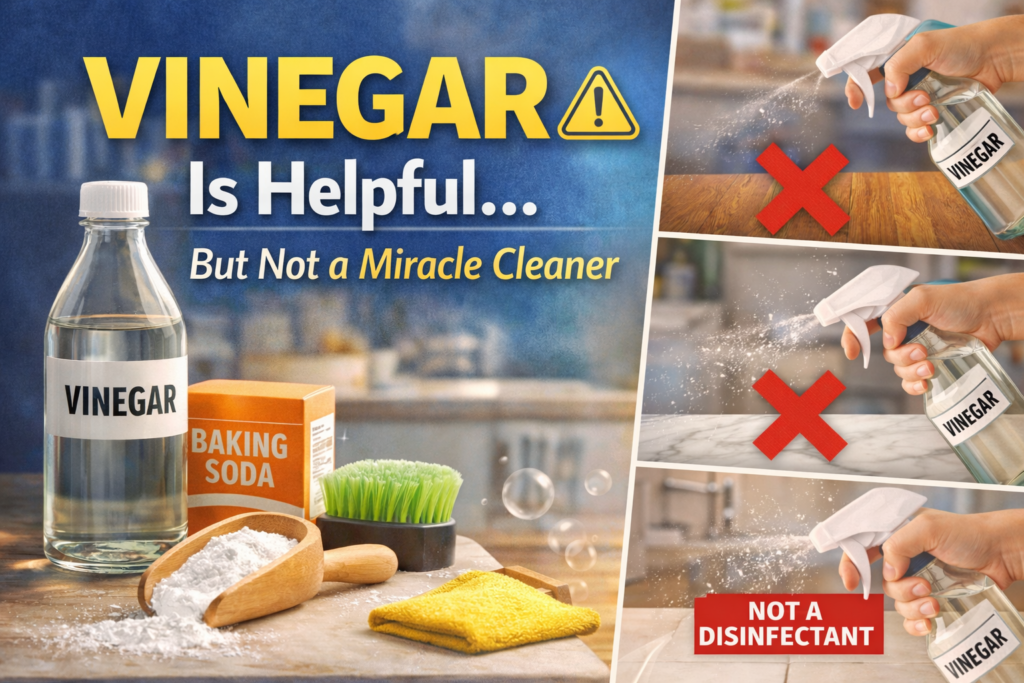
Vinegar Is Helpful — But Not a Miracle Cleaner
Vinegar is often praised as a universal cleaning solution, but it’s not the all-purpose cleaner many people believe it is.
Many homeowners assume vinegar can be safely used on every surface and even kill harmful germs. In reality, vinegar has limitations. For example, it should never be used on natural stone surfaces like marble or granite because its acidity can damage the finish.
It’s also not suitable for hardwood floors and cannot be considered a reliable disinfectant. In fact, vinegar is not recognized as a disinfectant by the Environmental Protection Agency.
However, vinegar still has several useful cleaning applications. It works extremely well in laundry as a natural fabric softener, helps remove soap scum in bathrooms, and is effective at eliminating odors once its strong scent fades.
Mixing Baking Soda and Vinegar Is Mostly Overrated
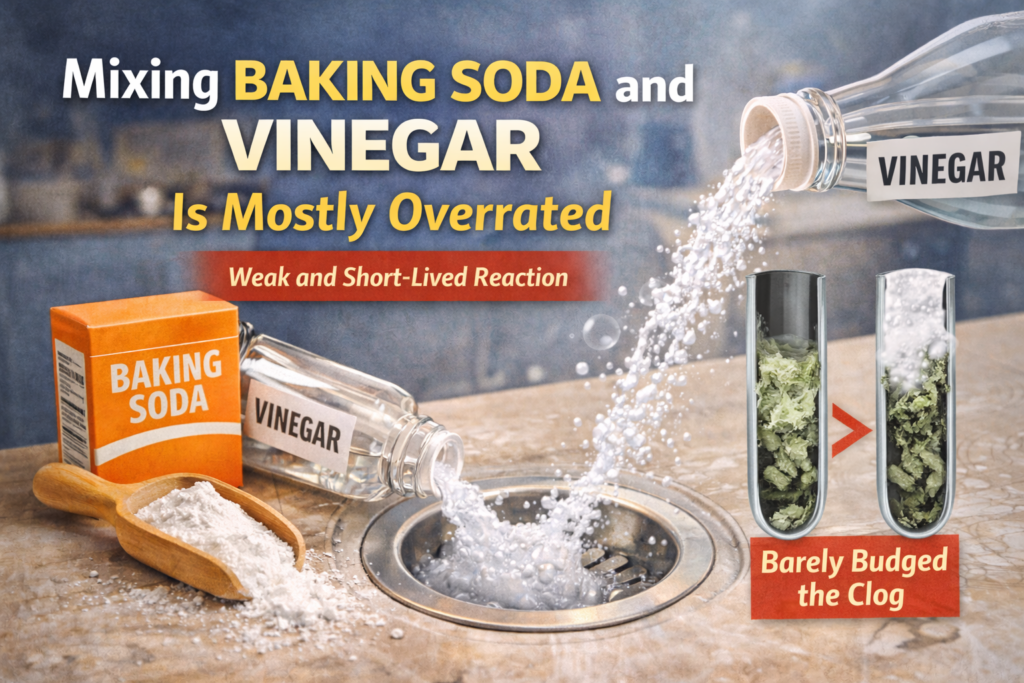
The classic baking soda and vinegar reaction is fascinating to watch, but it isn’t always effective for cleaning.
Many people use this combination to unclog drains because it produces bubbling foam. While the fizzing reaction can loosen some debris, it doesn’t generate enough force to fully remove stubborn buildup inside pipes.
After the reaction ends, the mixture loses its cleaning power and becomes relatively ineffective.
That said, both ingredients are still excellent cleaners when used separately. Baking soda is one of the best natural deodorizers and works well in homemade scrubbing pastes, while vinegar can break down soap residue and mineral buildup.
Most People Use Too Much Cleaning Product
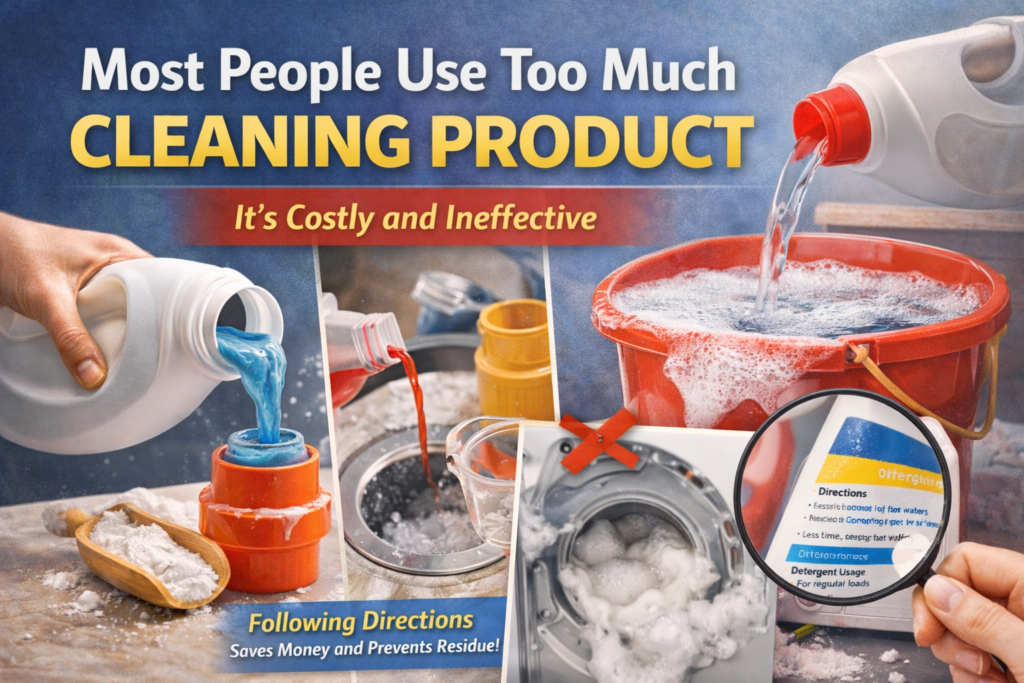
Using more cleaning product doesn’t necessarily mean better results.
Laundry detergent is one of the most common examples. Many people pour large amounts into the washing machine, but modern detergents are highly concentrated and usually require much smaller quantities.
Using too much detergent can leave residue on clothing and even cause unpleasant odors over time.
The same principle applies to floor cleaners. If they are not properly diluted, they can leave behind sticky residue that attracts dirt and makes floors appear dirty again much faster.
Reading Cleaning Labels Is Extremely Important
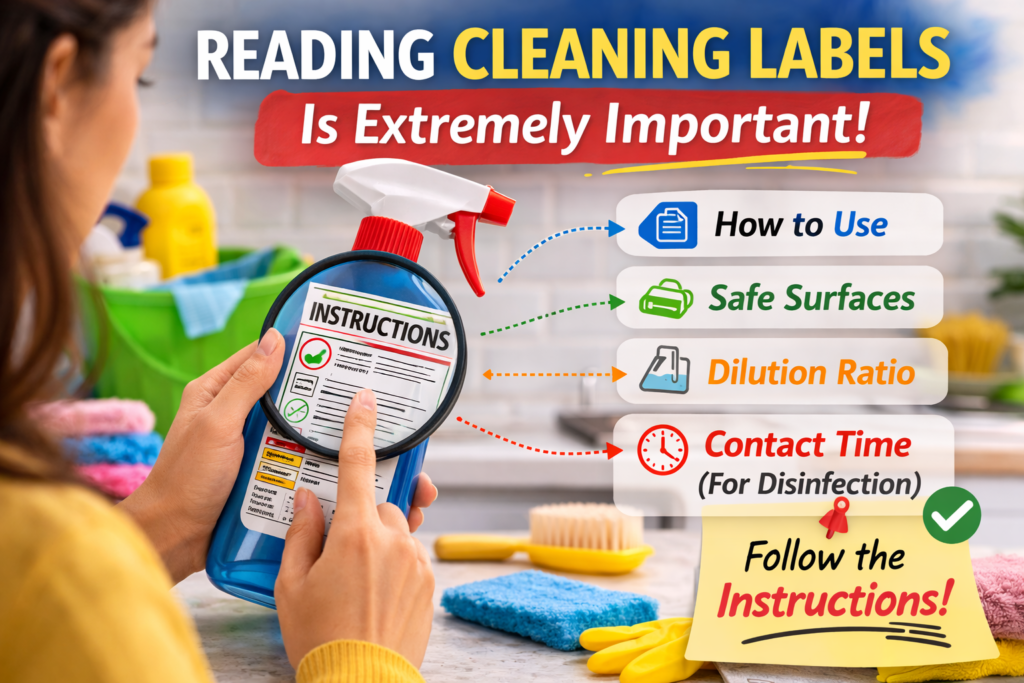
One of the biggest mistakes people make during cleaning is ignoring the instructions on product labels.
These labels provide valuable information about how to safely and effectively use the product. They explain which surfaces the cleaner is designed for, whether it needs to be diluted, and how long it should remain on a surface.
For disinfecting products in particular, the contact time listed on the label is essential. If the product is wiped away too quickly, it may not properly sanitize the surface.
Following these instructions can significantly improve cleaning results and prevent accidental damage to household surfaces.
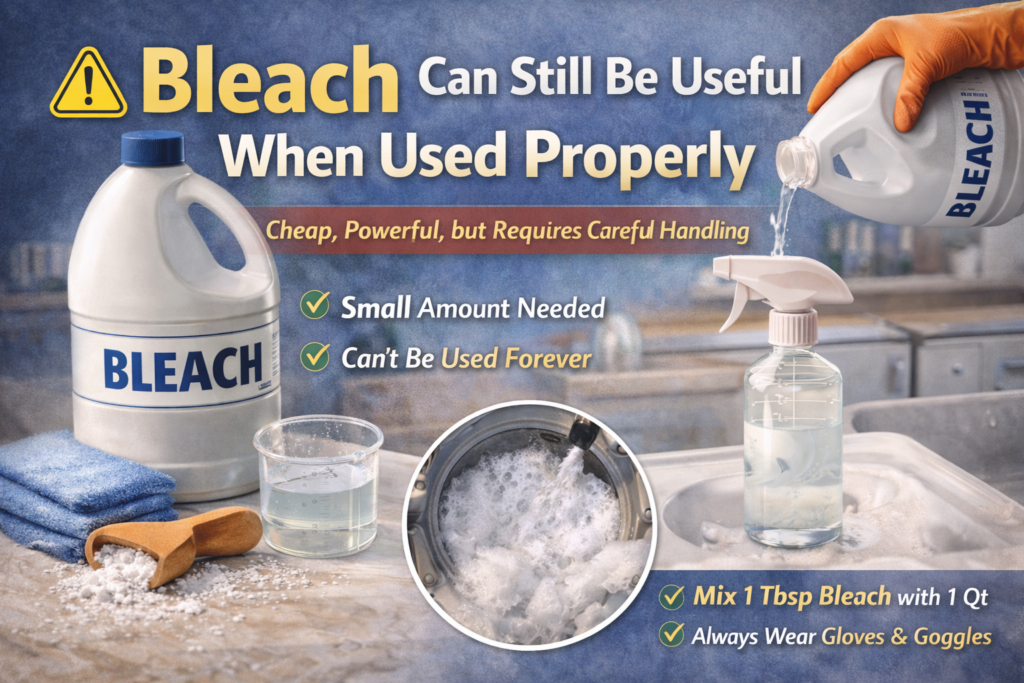
Bleach Can Still Be Useful When Used Properly
Although some people avoid bleach, it remains one of the most effective disinfectants available.
Hospitals, laboratories, and many government organizations recommend bleach for disinfecting surfaces because it kills a wide range of germs and viruses.
However, bleach must be used correctly. In most cases, only a small amount is needed when mixed with water. Another important fact many people don’t realize is that bleach loses effectiveness over time. An old bottle may no longer work properly, so it should usually be replaced after about a year.
Interestingly, bleach is not always the best choice for laundry. While it can remove certain stains, alternatives like oxygen bleach often provide better results for whitening fabrics.
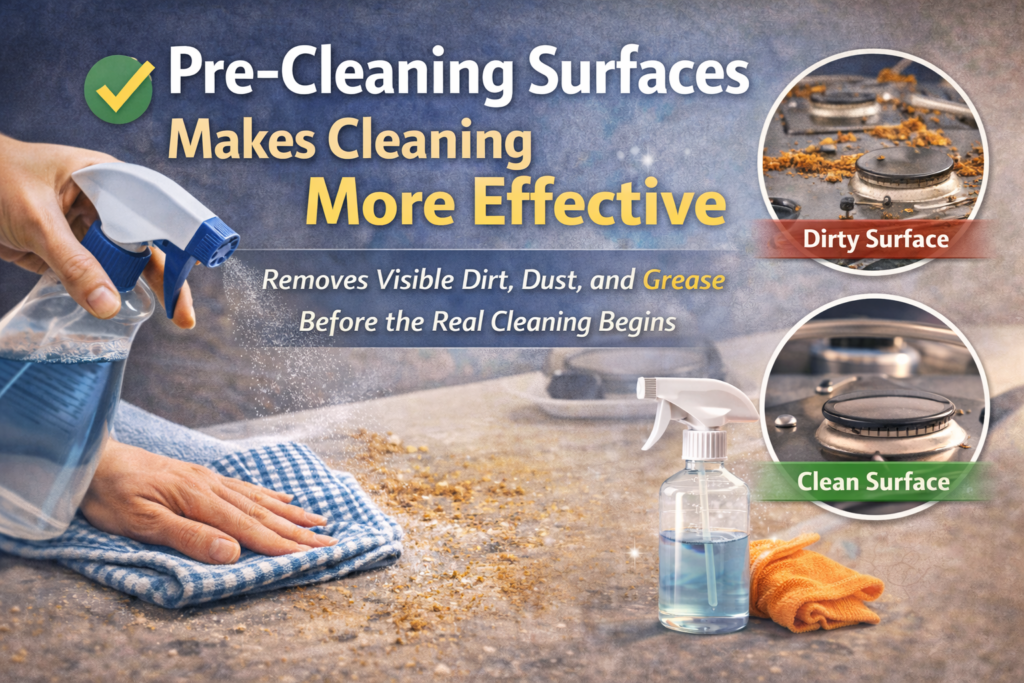
Pre-Cleaning Surfaces Makes Cleaning More Effective
Before using any cleaner or disinfectant, it’s important to remove loose debris first.
Crumbs, dirt, and grime can prevent cleaning products from reaching the surface properly. If these materials remain in place, disinfectants may not fully eliminate germs hidden underneath them.
For this reason, a quick wipe or dusting before applying cleaning products can significantly improve the effectiveness of the cleaning process.
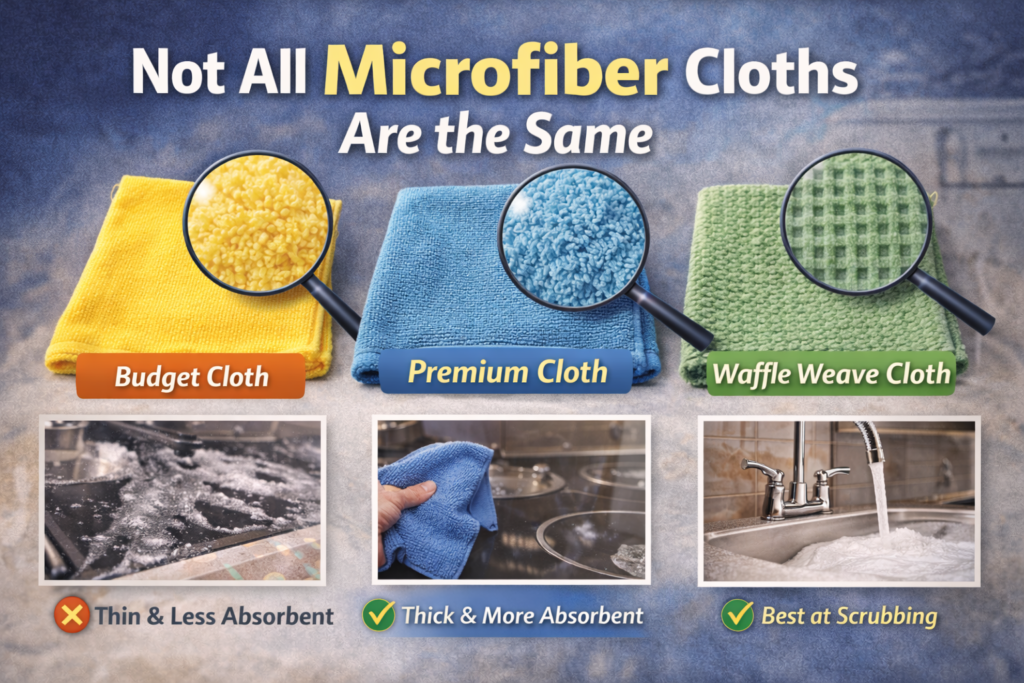
Not All Microfiber Cloths Are the Same
Many households rely on microfiber cloths, but few people realize that different types are designed for different tasks.
Standard microfiber cloths are great for dusting and general cleaning. However, they may leave streaks on glass or mirrors.
For glass surfaces, it’s better to use a smooth microfiber cloth specifically designed for polishing glass. These cloths prevent lint transfer and help achieve a streak-free finish when used with glass cleaner.
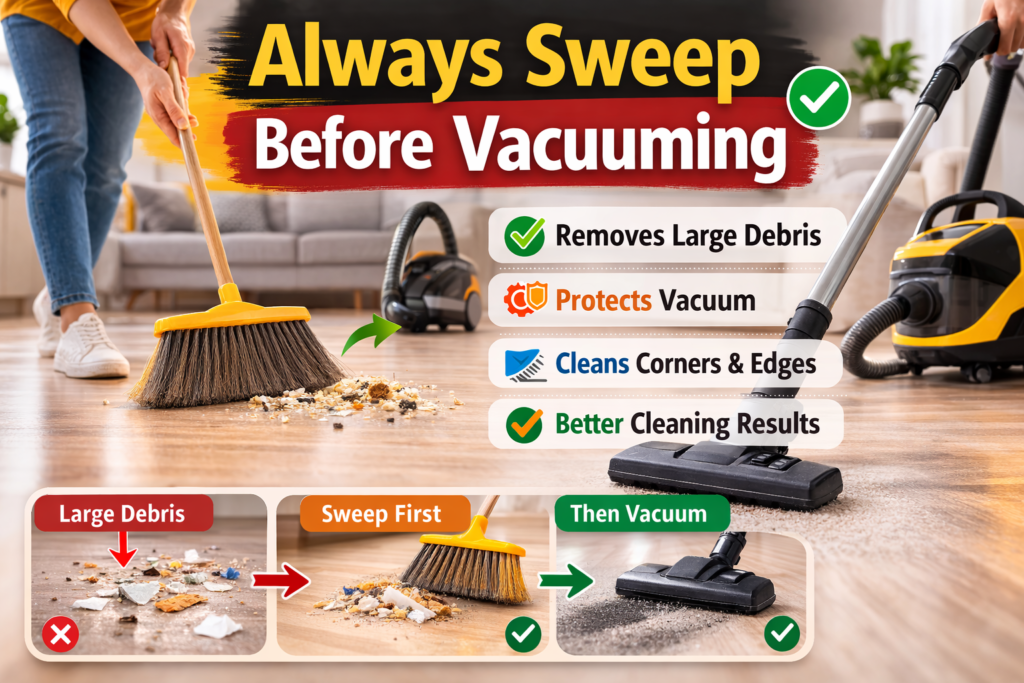
Always Sweep Before Vacuuming
Modern households often rely heavily on vacuum cleaners, sometimes skipping sweeping altogether. However, this habit can damage the vacuum over time.
Large debris, broken glass, or other solid objects can clog or damage vacuum components. Sweeping first removes larger debris and reduces the risk of mechanical problems.
A broom is also useful for cleaning corners, baseboards, and tight spaces that vacuums often miss.
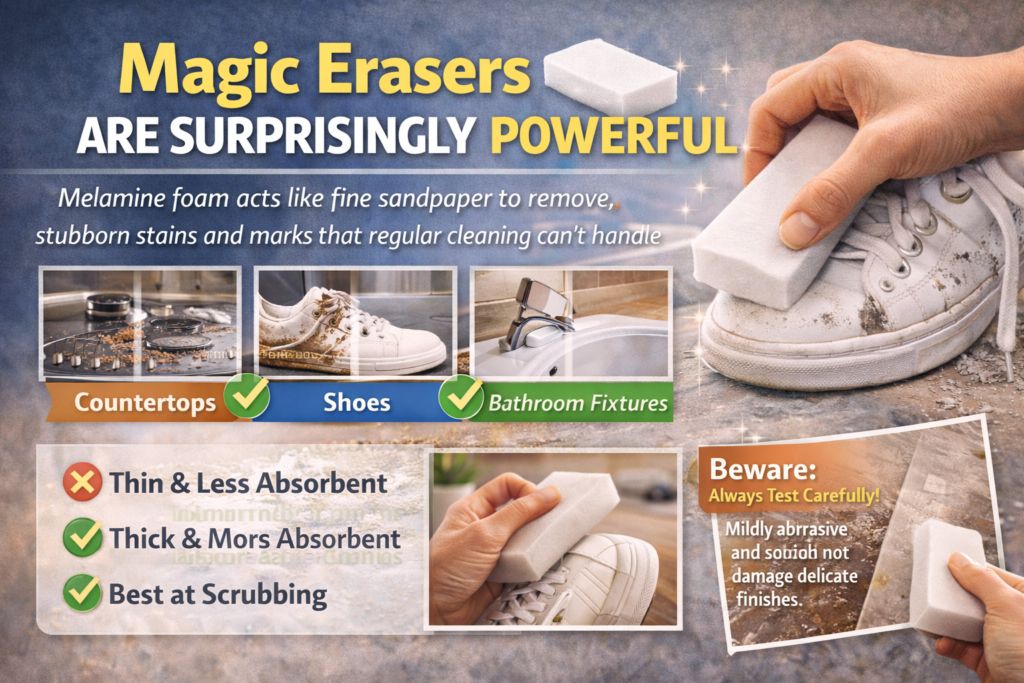
Magic Erasers Are Surprisingly Powerful
Magic erasers are made from melamine foam, a material that works like extremely fine sandpaper. This allows them to remove stubborn stains and marks that regular cleaning methods cannot handle.
They are useful for cleaning many surfaces, including countertops, shoes, bathroom fixtures, and even baking trays.
However, because they are mildly abrasive, they should be used carefully. Testing them on a small hidden area first is always recommended to avoid damaging delicate finishes.
Conclusion
After spending more than a decade studying cleaning techniques and interviewing professionals, one thing has become clear: effective cleaning isn’t about using more products — it’s about using the right methods.
Understanding the limitations of popular ingredients like vinegar, using cleaning products correctly, and following simple habits such as pre-cleaning surfaces can dramatically improve results.
By applying these expert-tested strategies, anyone can make their cleaning routine more efficient, safer, and far more effective.
Explore More: Your Definitive Resource for Comprehensive Home Cleaning and Upkeep
FAQs
1. What are the most effective cleaning tips for beginners?
Some of the most effective cleaning tips include using the right amount of cleaning product, reading product labels carefully, and removing loose dirt before applying cleaners. Simple habits like sweeping before vacuuming and using the correct cleaning tools can significantly improve results.
2. Is vinegar a good all-purpose cleaner?
Vinegar is useful for certain cleaning tasks such as removing soap scum, deodorizing surfaces, and softening laundry. However, it should not be used on natural stone surfaces like marble or granite and it does not work as a registered disinfectant.
3. Does mixing baking soda and vinegar clean drains effectively?
Mixing baking soda and vinegar creates a bubbling reaction that can loosen minor debris, but it is not powerful enough to remove serious clogs. Hot water and proper drain cleaners are usually more effective solutions.
4. Why should you avoid using too much cleaning product?
Using excessive cleaning products can leave residue on surfaces, attract more dirt, and even damage appliances like washing machines. Most modern cleaning products are concentrated, so only a small amount is needed.
5. Why is it important to read cleaning product labels?
Cleaning labels contain important instructions about proper usage, dilution ratios, and safe surfaces. Following these instructions helps prevent damage to household materials and ensures the cleaner works effectively.
Leave a Reply